
Lunchbox Logic Clues: 3 Clever Fruit Assignments
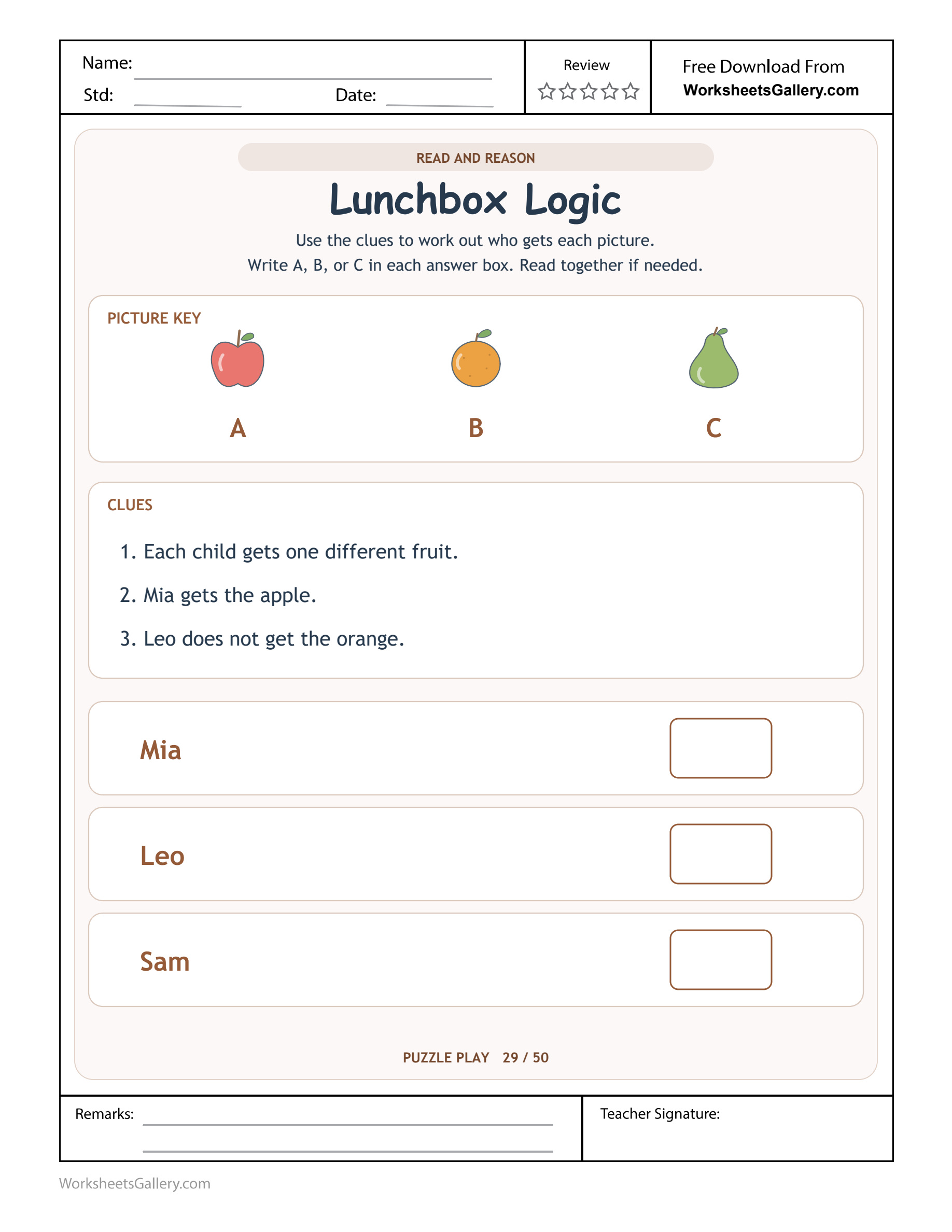
$5 · 25 supplied sheets: Lunchbox Logic Clues. Combine a positive clue with a negative clue while keeping each fruit exclusive.
Three children, three fruits and one small word make this lunchbox investigation worth discussing. Lunchbox Logic Clues combines a direct placement with an exclusion, then asks for a letter code beside each name. An adult can read the clue sentences while a child handles the reasoning. Fruit tokens offer a practical way to test an idea before writing A, B or C. Keep the picture key visible and check the completed arrangement against every clue. A correct allocation matters, but so does understanding why another allocation would break a rule.
Lunchbox Logic Clues: read the actual puzzle
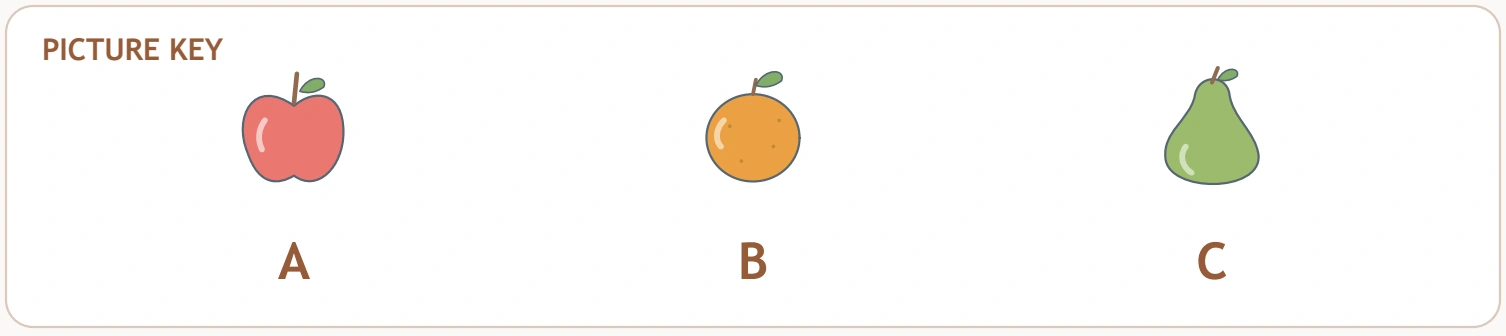
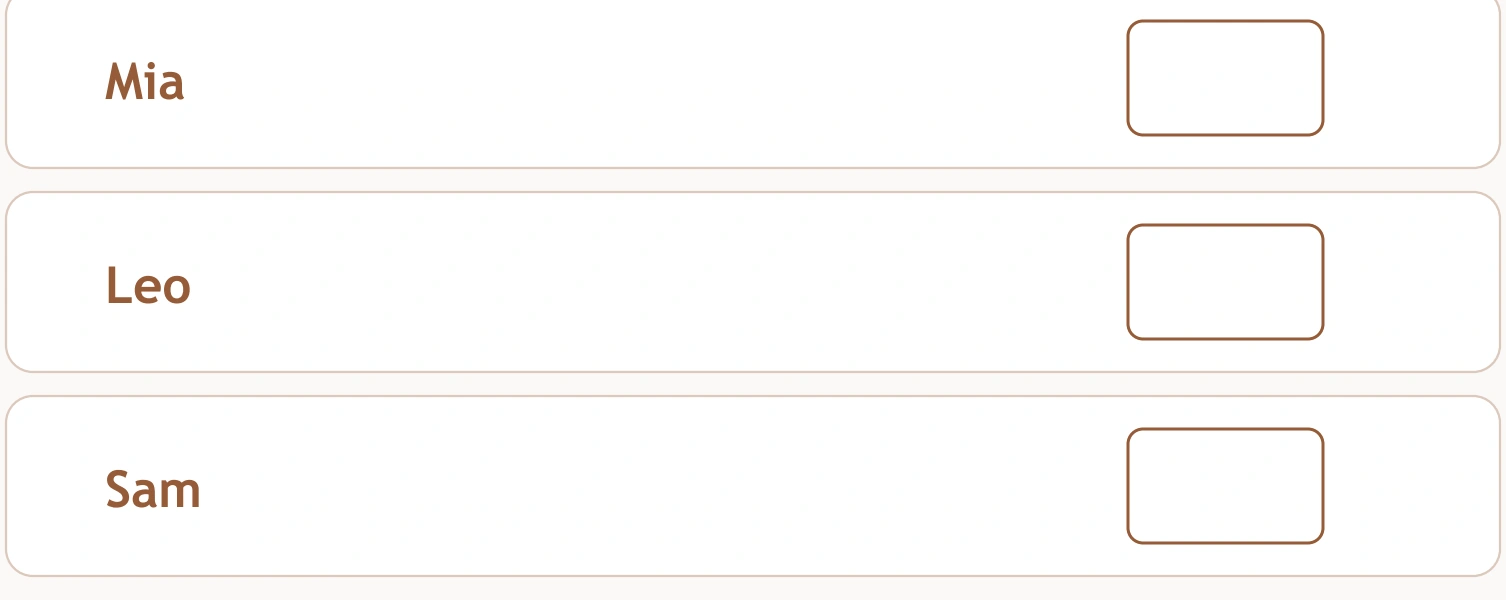
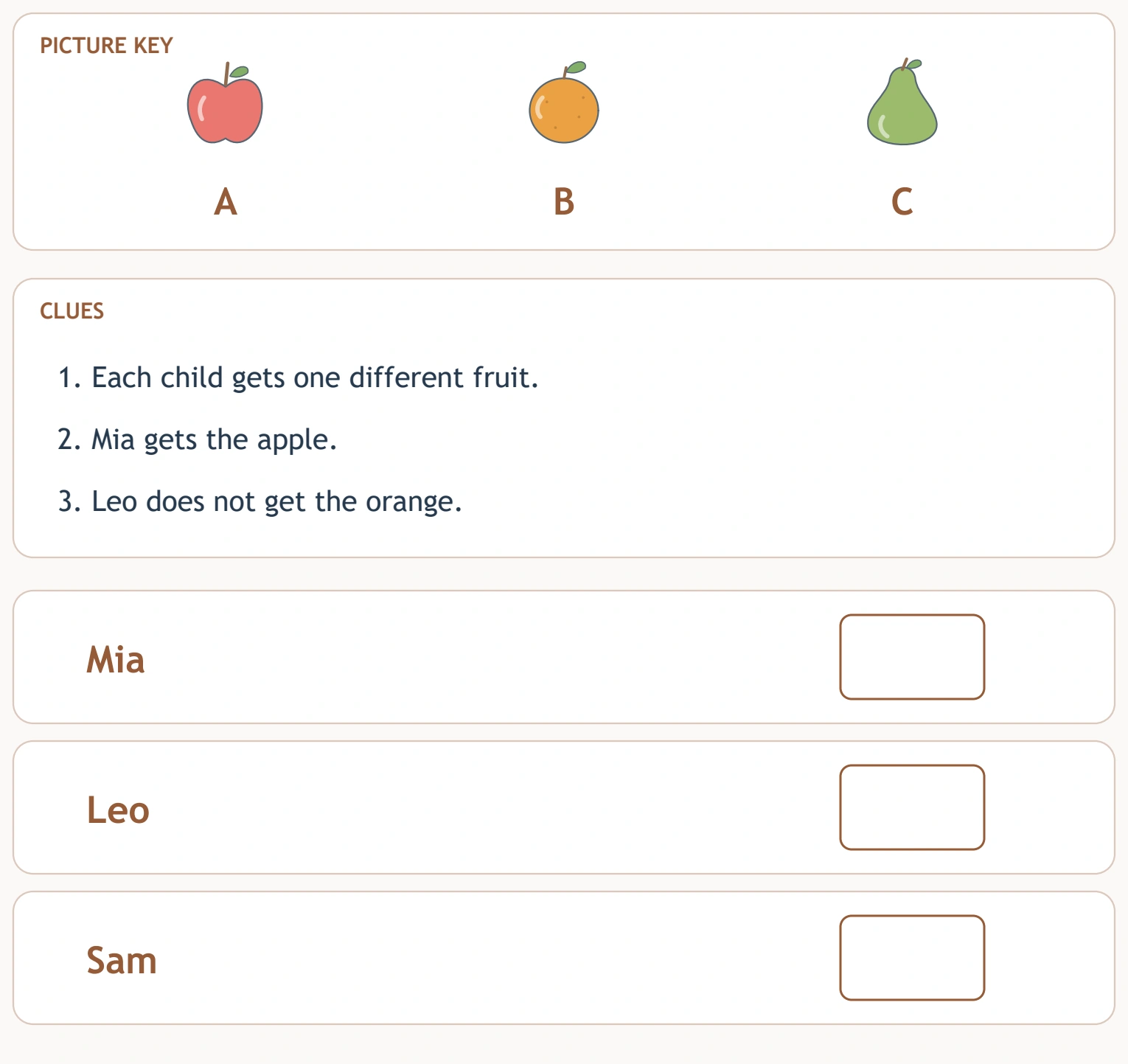
Lunchbox Logic Clues: Three pictured fruits form a code key: apple is A, orange is B and pear is C. The answer boxes beside Mia, Leo and Sam take those letters. They are not places to draw new fruit or write the children’s initials.
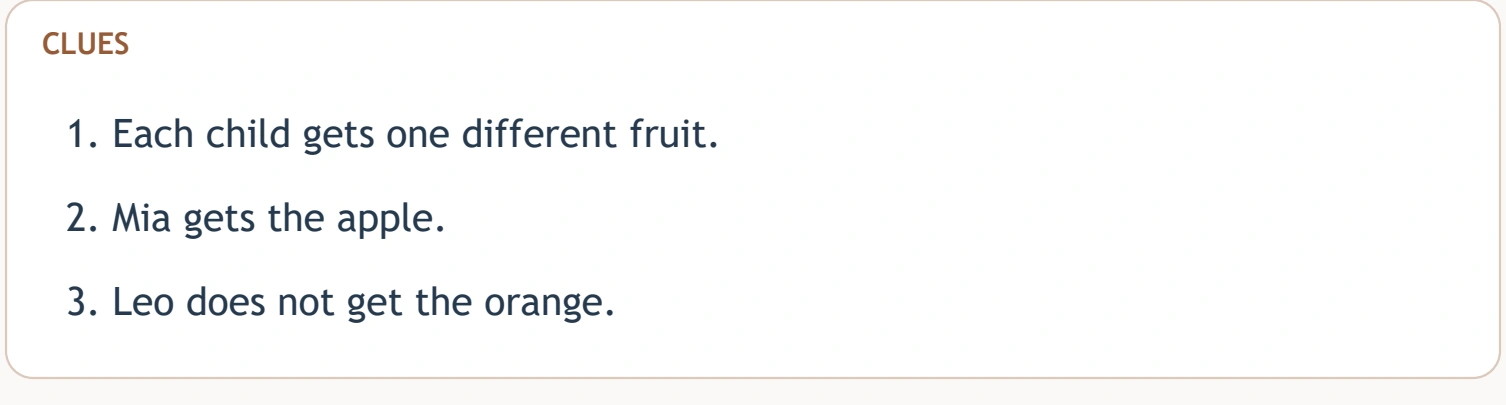
The first clue gives the whole puzzle a constraint: each child receives one different fruit. Once an apple belongs to Mia, that apple cannot also be assigned to Leo. Keeping track of used items turns three separate guesses into one linked problem.
Negative clue deserves a second look
The second clue fixes Mia’s apple directly. Leo’s negative clue then excludes orange, and the one-each rule already excludes apple. Pear is therefore the remaining possibility for Leo. Read the negative wording slowly rather than turning it into a preference question.
After two placements, the remaining fruit goes to Sam. Verify the complete arrangement against all three clues before recording the final code. The checking step shows why an answer is forced rather than merely possible.
Another visit through solution verification
Let the child become the clue reader once the allocation makes sense. Explaining why an adult’s deliberately repeated fruit is impossible can make a return visit feel like a genuine detective job.
Revisit Lunchbox Logic Clues through whole solution. Recognise explanations about whole solution from Dara.
Imagine Dara investigating at home
Dara’s father reads the clues while Dara places three large fruit tokens beside handwritten names. When Dara offers Leo an apple, they point back to Mia’s fixed assignment. Moving tokens lets them discuss the conflict before any worksheet answer needs erasing.
Try “Which code belongs to the pear?” during this imagined Lunchbox Logic Clues visit. Let Dara explain picture code before recording.
Six observations from picture code
Constraint reasoning — picture code
Lunchbox Logic Clues invites using all clues together instead of answering each line independently. Notice Dara’s constraint reasoning explanation: “Which code belongs to the pear?”
Negation language — fixed fact
Lunchbox Logic Clues invites hearing does not as an exclusion with a precise consequence. Notice Dara’s negation language explanation: “Which placement does the page tell us outright?”
Symbol translation — negative clue
Lunchbox Logic Clues invites moving from a fruit decision to its A/B/C recording code. Notice Dara’s symbol translation explanation: “What is still available for Leo?”
Working record — whole solution
Lunchbox Logic Clues invites tracking fruit already assigned so it is not used twice. Notice Dara’s working record explanation: “Have we used each fruit exactly once?”
Small-letter control — picture code
Lunchbox Logic Clues invites writing one readable capital inside the correct person’s box. Notice Dara’s small-letter control explanation: “Which code belongs to the pear?”
Solution verification — fixed fact
Lunchbox Logic Clues invites checking a complete arrangement against the original statements. Notice Dara’s solution verification explanation: “Which placement does the page tell us outright?”
Partners explore negation language
At a reasoning station, partners take narrator and allocator roles. The narrator reads one clue and the allocator explains which possibility changes. They delay writing letters until their three-token arrangement satisfies every clue, then swap jobs for an invented extension.
A Lunchbox Logic Clues classroom note can describe moving from a fruit decision to its A/B/C recording code. Record the actual fixed fact prompt, too.
Readiness for fixed fact
An adult can read all names and clues aloud, making the challenge about reasoning rather than decoding sentences. Large letter tokens offer a useful response when the child can choose a code but is not ready to form it neatly.
Suggested Lunchbox Logic Clues range: ages five to seven. Dara’s readiness depends on constraint reasoning and interest in fixed fact. Shorten this Lunchbox Logic Clues visit when needed.
Five play invitations after fixed fact
Lunch token drama with Lunchbox Logic Clues
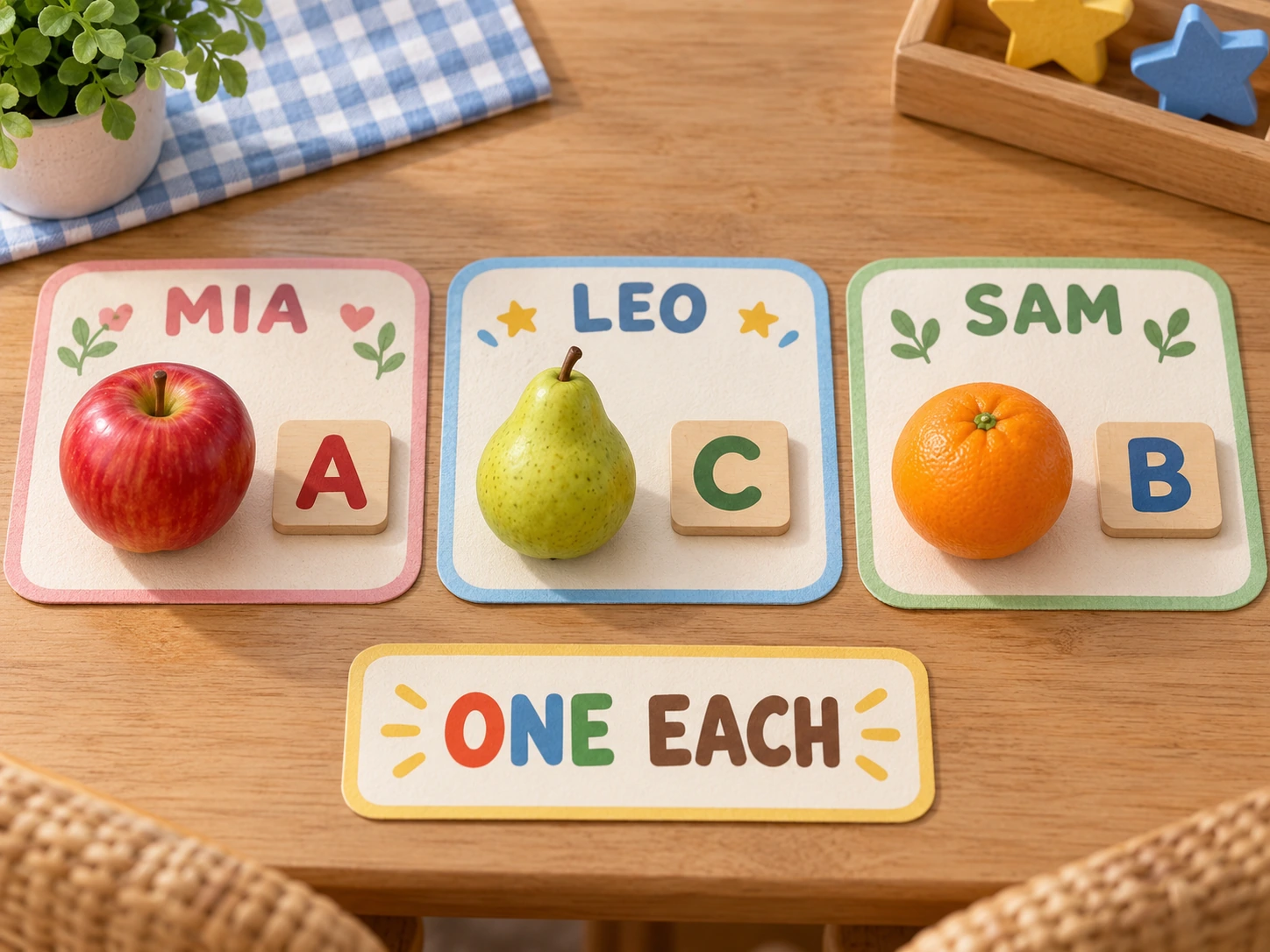
Give three toy diners different fruit tokens. State one fixed placement and one exclusion, then have the child act out an arrangement that obeys both.
Not means remove with Lunchbox Logic Clues
Offer three picture cards and read a negative clue. Turn over only the ruled-out card, discussing what remains possible before making a final assignment.
Code clerk with Lunchbox Logic Clues
After solving a separate fruit allocation, let one partner translate pictures into letter tickets while the other checks the key.
Find the broken clue with Lunchbox Logic Clues
Present an invented arrangement using one fruit twice. Ask which one-each statement fails before moving any token.
Build a new lunch puzzle with Lunchbox Logic Clues
Choose three different objects and dictate a direct clue plus an exclusion. Test whether those clues really leave only one complete solution.
Distinctions behind negative clue
Picture code — the Dara discussion
A negative clue seldom gives an answer by itself. Here it becomes decisive because Mia’s fruit and the different-fruit rule have already removed another choice. Invite the child to name both exclusions; this makes the logic visible without a formal truth table.
Fixed fact — the Dara discussion
Keep reasoning and transcription as two stages. A child who allocates the correct pear but writes B may need help consulting the key, not another explanation of Leo’s clue. Record which stage needed support so the next invitation targets the real difficulty.
Negative clue — the Dara discussion
An imagined lunchbox story adds interest, but the worksheet is not asking which fruit each character likes. Separate a playful invented preference from a stated clue. The printed evidence determines this allocation, even if a child would choose a different snack personally.
Revisit the negative clue difficulty
Treating “Leo does not get the orange” as “Leo gets the orange” reverses the evidence. Read that sentence alone and ask for a rejected fruit first. Also distinguish the answer code B from a child’s name: the key, not an initial, determines the letter.
Return to Lunchbox Logic Clues evidence by asking “What is still available for Leo?” Separate pencil execution from Dara’s picture code reasoning.
Eight closer readings of picture code
Read the little word not
Say Leo’s negative clue slowly and ask the child to identify a rejected fruit before seeking an answer. That first response checks whether the exclusion was heard. Then bring back the other clues, because removing orange alone still leaves more than one fruit until Mia’s assignment is considered. This Lunchbox Logic Clues distinction supports constraint reasoning.
One different fruit is a rule
The one-each statement links the children’s answers. Demonstrate it with three tokens that cannot be in two places at once. Once the apple is placed beside Mia, leave that token there while reasoning about Leo. This physical record makes an already-used option easier to notice.
Begin with a stated fact
Mia’s clue gives an immediate placement without trial and error. Find that anchor before testing uncertain combinations. The child can distinguish a directly supplied fact from an answer inferred through elimination, helping explain why the three allocations are related even though their evidence arrives in different forms. This Lunchbox Logic Clues distinction supports symbol translation.
An exclusion becomes decisive
For Leo, point to the fruit forbidden by his own clue and the fruit already allocated to Mia. Those are two distinct reasons for removing possibilities. Naming both makes the remaining pear a justified conclusion, rather than an answer guessed from the picture’s colour or its position in the key.
Translate only after allocating
Keep the fruit decision visible before consulting A, B or C. If the child selects a pear but records the orange’s letter, check the translation stage. There is no need to discard a correct allocation or reread every clue when the difficulty is matching one picture with its code. This Lunchbox Logic Clues distinction supports small-letter control.
Check all three statements
After placing three tokens, reread the original clues against the arrangement. Confirm different fruits, Mia’s apple and Leo’s exclusion. A solution that fits only the last sentence is incomplete. Let the child point to the part of the arrangement that demonstrates each statement in turn.
A remaining item has a reason
Sam’s fruit is determined by what remains after the other justified placements. Ask why that remaining token is available before writing its letter. The answer depends on earlier decisions obeying the clues; simply filling the last empty box does not by itself verify the complete solution. This Lunchbox Logic Clues distinction supports constraint reasoning.
Make the child the checker
Present an adult’s hypothetical arrangement with the apple used twice, or with Leo receiving orange. Invite the child to identify the broken clue before repairing it. This offers another reasoning turn without requiring a new worksheet, and makes explaining a contradiction feel like an authentic detective contribution.
Four checkpoints for Lunchbox Logic Clues
| Pause here | Inspect this clue |
|---|---|
| Picture code | Connect each fruit with the letter printed below it. |
| Fixed fact | Use Mia’s direct clue before testing alternatives. |
| Negative clue | Combine not orange with the one-each rule. |
| Whole solution | Read every clue against all three assignments. |
Picture code — Dara’s inspection
For Lunchbox Logic Clues, ask “Which code belongs to the pear?” Connect each fruit with the letter printed below it.
Fixed fact — Dara’s inspection
For Lunchbox Logic Clues, ask “Which placement does the page tell us outright?” Use Mia’s direct clue before testing alternatives.
Negative clue — Dara’s inspection
For Lunchbox Logic Clues, ask “What is still available for Leo?” Combine not orange with the one-each rule.
Whole solution — Dara’s inspection
For Lunchbox Logic Clues, ask “Have we used each fruit exactly once?” Read every clue against all three assignments.
Save and print Lunchbox Logic Clues
Sign in as an eligible active member to save the premium Lunchbox Logic Clues printable. Its clean PDF has no website watermark, domain wording or embedded ads, while the original sample remains a distinct option. Check the key, clue sentences and three named answer rows in your printer preview before printing the full portrait sheet.
Other choices beyond constraint reasoning
For Lunchbox Logic Clues, the saved catalog suggests road-following after lunchbox logic clues; aiming-and-stopping after lunchbox logic clues; picture-recipe drawing after lunchbox logic clues. Read each linked activity’s rule with Dara; its picture code response may differ.
For Dara, browse NAEYC writing ideas alongside lunchbox logic clues or PBS Parents activities beyond lunchbox logic clues. Watch constraint reasoning with symbol translation, then revisit picture code.
Popular Worksheets
Printable resources families and teachers are downloading now.
 Free
 Free
 Free
 Free