
Pp Letter Mission: 4 Brilliant Penguin-to-Cup Finds
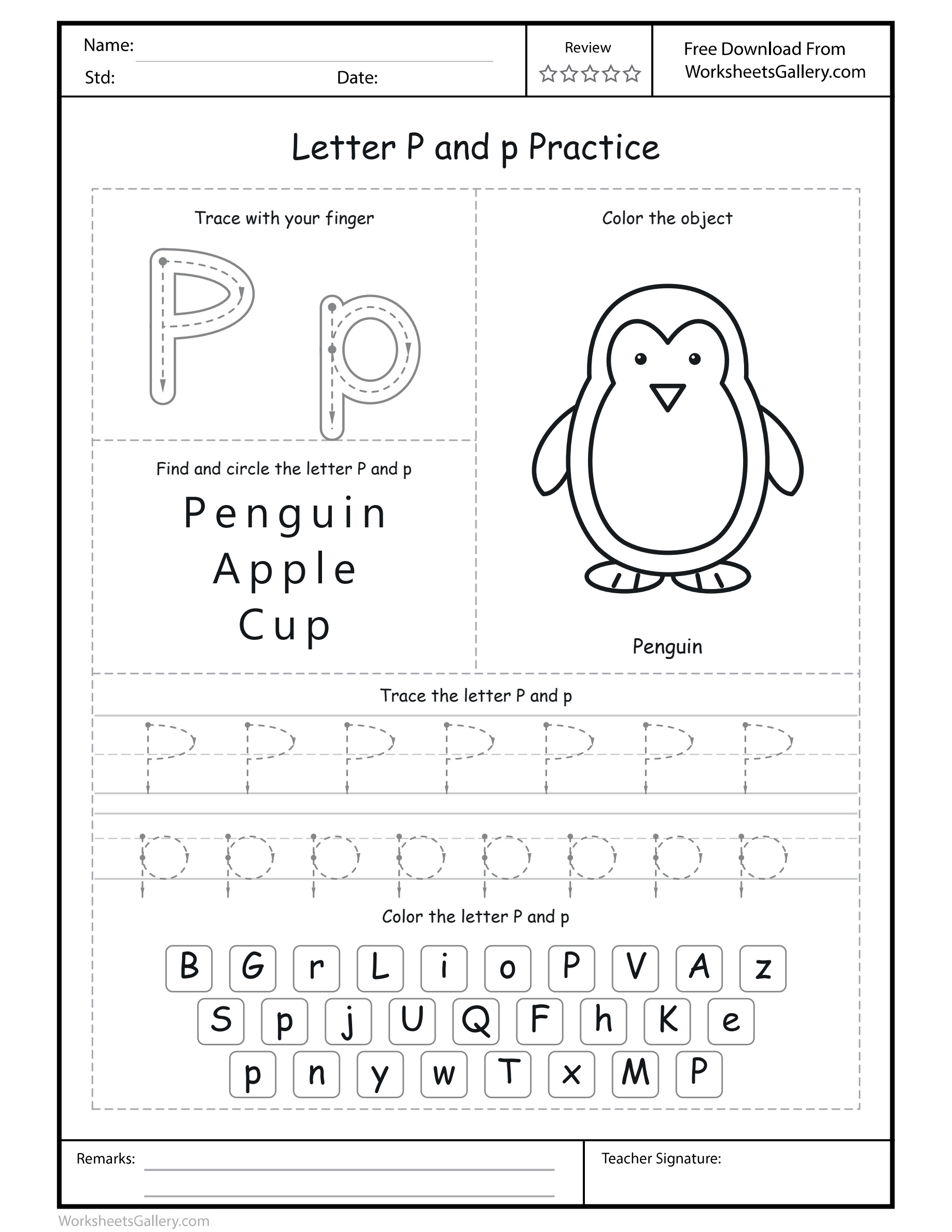
Pp Letter Mission belongs to the 26-page collection. Notice the double p in Apple and the descending stem in the supplied lowercase model.
Two p letters sit together inside Apple, and this sheet makes both worth finding. Pp Letter Mission connects that pair with the capital in Penguin and the final lowercase letter in Cup. Children can study a bowl and stem, follow the printed tracing cues, colour a penguin and compare mixed tiles. An adult reads each label so the learner can concentrate on visible letter evidence. A few deliberate marks, a conversation about position and a chance to revise a choice can make a useful preschool visit without completing everything at once.
Apple's pair is the central mission — Pp Letter Mission
Read Penguin, Apple and Cup in the word panel of Pp Letter Mission. Penguin begins with P. Apple contains p at positions two and three. Cup ends with p as its third character. The panel's four targets include both members of the adjacent Apple pair, each of which can receive a separate small circle.
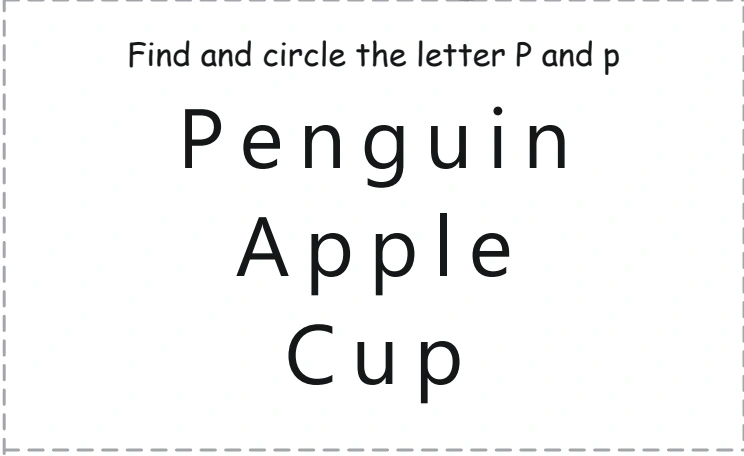
Finding the first p in Apple is a beginning rather than the end of that label's inspection. Place a finger beside the circle and ask what the next character looks like. The repeated outline is visible evidence. Avoid asking for two separate /p/ sounds merely because two p letters are printed together; this activity is about the written characters.
| Label to share | P/p evidence | Mission detail |
|---|---|---|
| Penguin | P at 1 | Check the opening capital. |
| Apple | p at 2 and 3 | Inspect both neighbours. |
| Cup | p at 3 | Follow the word to its end. |
In Pp Letter Mission, knowing the object name does not require reading its label independently. Supply the spoken word, then invite the child to compare a character with the large model. Pointing, adult-assisted circling and an independent mark are all ways to make the visual decision clear.
Keep the lower stem in view: Pp Letter Mission
Look at the supplied large P and p. The capital has an upright and a high bowl. The lowercase model has a bowl with a stem extending below it. Follow the sheet's starting cues and arrows, noticing the lower reach of p keeping hands and comparison cards clear of the descending part.
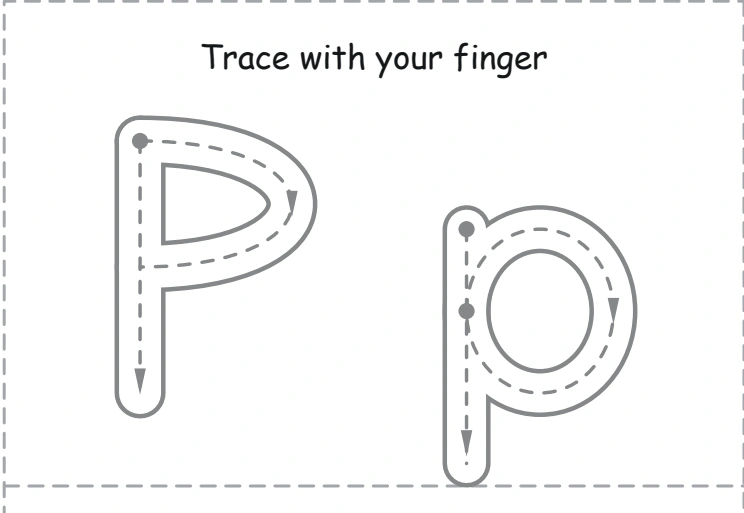
The lower extension gives Pp Letter Mission a specific comparison when p is confused with another rounded letter. Look at the bowl's side and the stem's direction together. One rounded part alone is not enough to establish a match. Let the child place a finger beside the feature they used as evidence.
Finger tracing can introduce the route before a pencil is picked up. An adult can name the letter and point to a start mark while the learner controls the movement. If the attempt rises instead of descending, compare its orientation with the printed model and choose one fresh try rather than repeatedly erasing the same mark.
A classroom penguin provision station, imagined: Pp Letter Mission
Imagine Pia helping arrange a pretend provision station for a penguin puppet. The teacher sets out a cup and an apple, with completed labels read aloud. Pia finds p in Cup and then one p in Apple. A partner asks whether the neighbouring character might belong to the same family.
Pia compares both with the large model on Pp Letter Mission, notices the matching stems and bowls, and points to the second p. The teacher describes the useful action: she checked beside an answer. The Penguin label supplies the capital, which Pia can match without needing to read all seven characters herself.
The children return the labels to the objects and choose a section of the printable. Pia might colour while the partner points through one tile row, then exchange roles later. This imagined station makes the letter search cooperative without adding an expectation to finish the whole page during group time.
Six things the mission can reveal: Pp Letter Mission
Attention to repeated print. Apple's adjacent p letters ask the learner to inspect both characters. Pp Letter Mission offers a clear example of continuing after one successful find.
Connection across cases. The capital in Penguin and the lowercase word targets can be named together. Their identity is shared even though the stem proportions differ.
Orientation awareness. Looking below the bowl helps distinguish the supplied p form. An adult can ask about that visible extension instead of describing every rounded letter at once.
Planned pencil movement. The stem and bowl offer separate features to preview. Finger work on Pp Letter Mission can reduce the demands while the route is being introduced.
Talk about neighbours. Beside, inside and last give words to the locations in Apple and Cup. A child can demonstrate these ideas by pointing before using them in a sentence.
Comfort with revision. A missed second target can be found through comparison. Naming the improved search strategy supports participation without promising that a single page establishes mastery.
A penguin with a personal palette: Pp Letter Mission
Invite the child to choose colours for the penguin drawing on Pp Letter Mission. The worksheet does not prescribe a colour key. A colourful imagined penguin can be discussed as a creative decision, separately from whether the P/p characters were found accurately.
Read Penguin again if the learner asks about its label, and point to its opening P. A short story about where the penguin is going can follow. If the adult writes the story, use separate paper with complete words so the worksheet's original search panel remains uncluttered and easy to inspect.
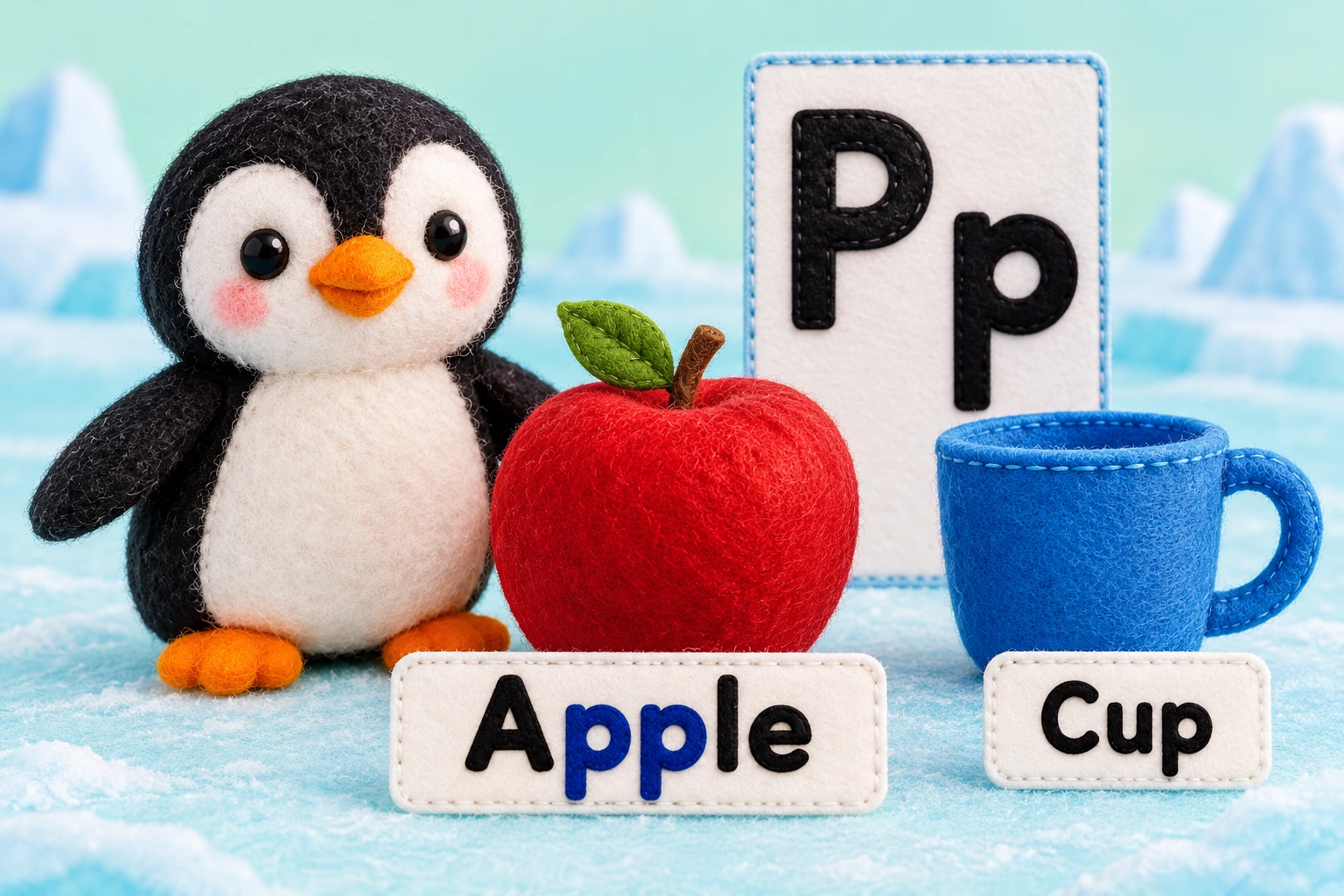
The supporting felt-style scene brings a penguin, apple and cup together with completed labels. Both p letters in Apple are made conspicuous for discussion. Return to the ordinary source print on Pp Letter Mission afterward, where the learner can apply the observation without coloured targets giving the answer away.
Select a few guides with enough room below: Pp Letter Mission
The handwriting area of Pp Letter Mission provides seven P practice guides and eight p examples. Preview the lowercase stems and the writing space they use, then select an amount that fits the learner's hand comfort. A few considered movements can be more informative than a hurried full row.
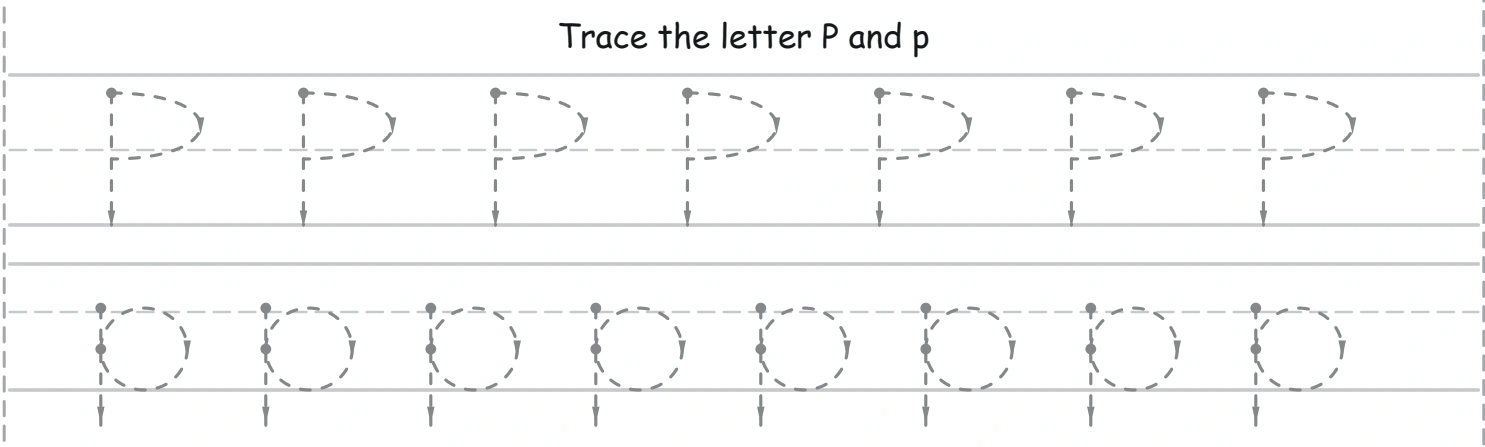
If a p loses its lower extension, compare that attempt with the model and ask what continues farther down. If the bowl is hard to see, look at its joining area on the next try. One feature is enough for a useful correction. Keep the sheet anchored so a moving page does not add another challenge.
After one capital and one lowercase attempt, invite the child to show which feature changed between the cases. A pointing answer is sufficient. Pp Letter Mission can be revisited after a movement break or on another day, with the unused guides serving as opportunities rather than unfinished obligations.
The tile search reaches both edges: Pp Letter Mission
Twenty-seven mixed tiles appear on Pp Letter Mission with ten tiles above, nine in the middle, and eight below. Its four P/p answers include two of either case. For adult checking, the whole-field positions are 7, 12, 20 and 27. The last row includes targets at its beginning and end, so a complete sweep matters.
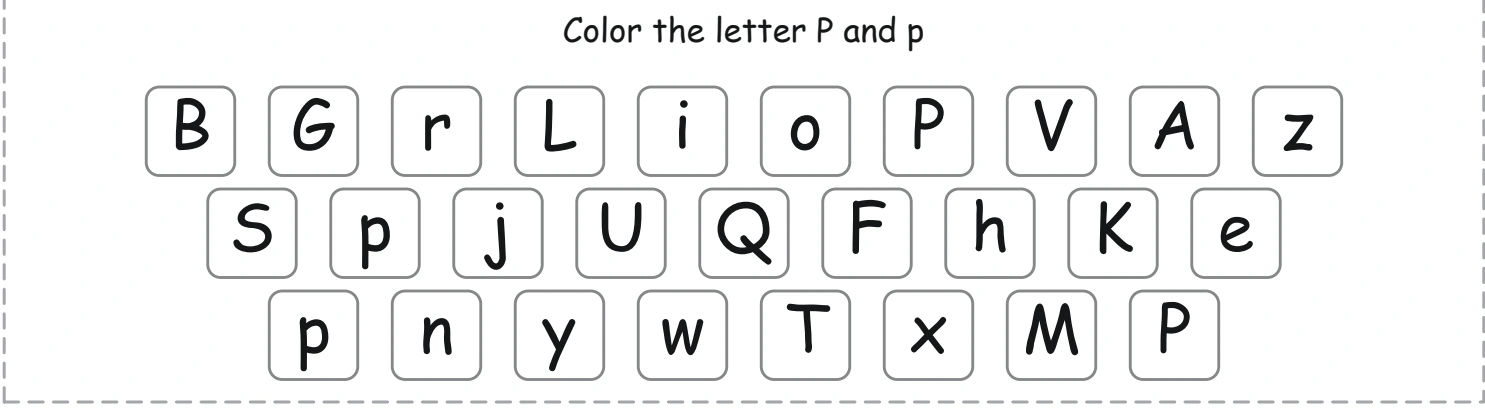
A child can move through each row visually, comparing the full stem-and-bowl outline with the large pair. There is no need to calculate the adult position numbers. A pointer can mark the current place while the learner glances at the model and then resumes the inspection.
If a similarly rounded character is selected, ask which side carries its stem and where the stem extends. Keep the comparison on the actual printed forms. Pp Letter Mission welcomes an uncertain answer being set against the reference and reconsidered. Finding a target near one edge should not prevent checking the rest of that row.
Five penguin provision games: Pp Letter Mission
Apple twin check: Pp Letter Mission
Write a completed Apple card and read it. Touch each p separately, then remove your finger and let the child locate the pair. Show the same two neighbours in Pp Letter Mission before putting the extra card aside.
Cup ending delivery: Pp Letter Mission
Put a Cup label beside a toy cup. Read the label and let a token travel to its final p. The object in this Pp Letter Mission game supplies meaning; the written ending supplies the letter evidence.
Bowl-and-stem build: Pp Letter Mission
Arrange a straight strip and a loop to suggest p, leaving the strip visible below the loop. Compare the completed construction with the supplied lowercase model. Clear the materials before tracing so the movement cues remain easy to see.
Capital passport: Pp Letter Mission
Give the penguin puppet a finished card reading Penguin. Ask the learner to match its first P with the capital on Pp Letter Mission. This keeps case comparison playful without introducing a new spelling requirement.
Last-tile promise: Pp Letter Mission
Choose one row and agree to inspect its final tile before stopping. Partners can share pointing and model checking. The rule supports complete visual coverage rather than a speed score.
A home picnic cup, imagined: Pp Letter Mission
Picture Pia preparing a pretend picnic at home. A family member reads completed Apple and Cup cards beside the objects. Pia finds the p at the end of Cup, then uses the large p model from Pp Letter Mission to inspect Apple. She touches its two neighbouring targets and tells the adult they look alike.
The family member asks what goes below the bowl in the lowercase model. Pia points to the stem and tries one finger trace. This imagined return connects a familiar object setting with a precise print feature. It can finish there, without asking for an independently written shopping list or several extra worksheet copies.
Change the support, preserve the comparison: Pp Letter Mission
For children roughly three to six, Pp Letter Mission can involve shared pointing, an adult making chosen circles or an independent search with discussion. Visual recognition may be comfortable before the descending pencil stroke is. Let the response method show what the learner notices instead of making handwriting the only way to participate.
Typical difficulties include missing Apple's second p, selecting only word beginnings, reversing a stem orientation or abandoning a row after one target. Use the relevant response: inspect the neighbour, track the complete label, compare the stem below the bowl, or place a pointer at the next tile. One targeted prompt is easier to act on than several corrections together.
On a later visit, begin Pp Letter Mission with Cup's ending or with a capital/lowercase model comparison. Short returns can alternate conversation, colour and movement. Describe a specific successful check before stopping, so the next encounter can begin from something the child remembers doing.
From this mission to the next file: Pp Letter Mission
Compare Pp Letter Mission with Pp Worksheet. A listening follow-up to Pp Letter Mission is First Sound Choices. For Pp Letter Mission, explore Qq Worksheet.
Adults seeking participatory extensions can explore NAEYC's play materials. For more shared print and story activities, PBS Parents' literacy resources provide another starting point. The printable does not require those extensions; select them when they fit the child's interest.
Download controls on this page provide the original Pp Letter Mission sample. An eligible active member can obtain a separate protected clean single-sheet PDF. Check the print preview carefully so the entire frame and the lower p stems remain visible. Reducing the page too far can make its small directional details harder to compare.
The collection card opens the $5 Alphabet Wordwork Collection, sold separately as one PDF containing twenty-six clean letter worksheets. It is an option for families or teachers planning a complete A–Z sequence. Individual clean-sheet membership access and purchase of that collection are distinct routes, both easy to locate from Pp Letter Mission.
Popular Worksheets
Printable resources families and teachers are downloading now.
 Free
 Free
 Free
 Free