
Sailboat Grid Sketches: 3 Wonderful Sail Studies
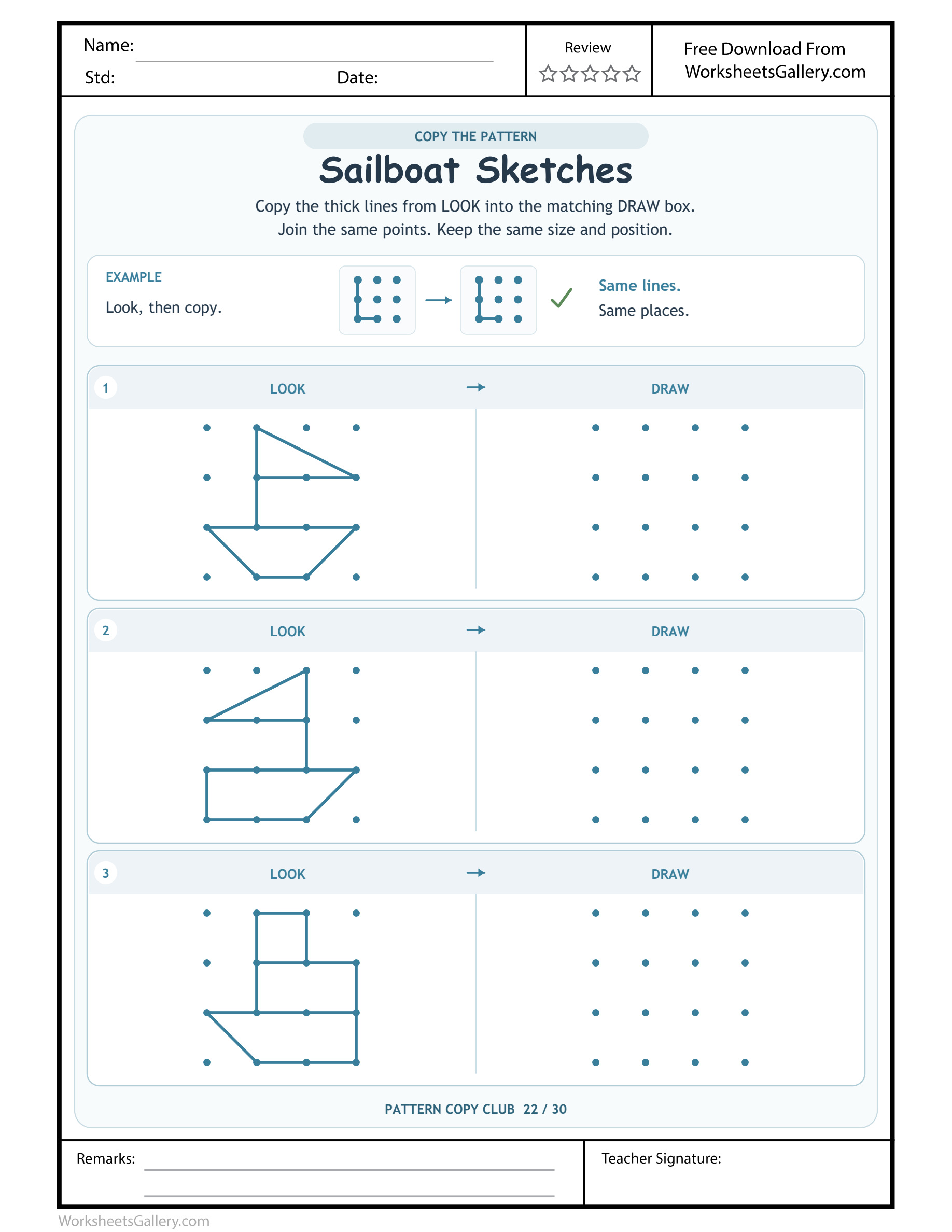
Sailboat Grid Sketches: Compare sail direction, mast and hull offsets before drawing the boat copy.
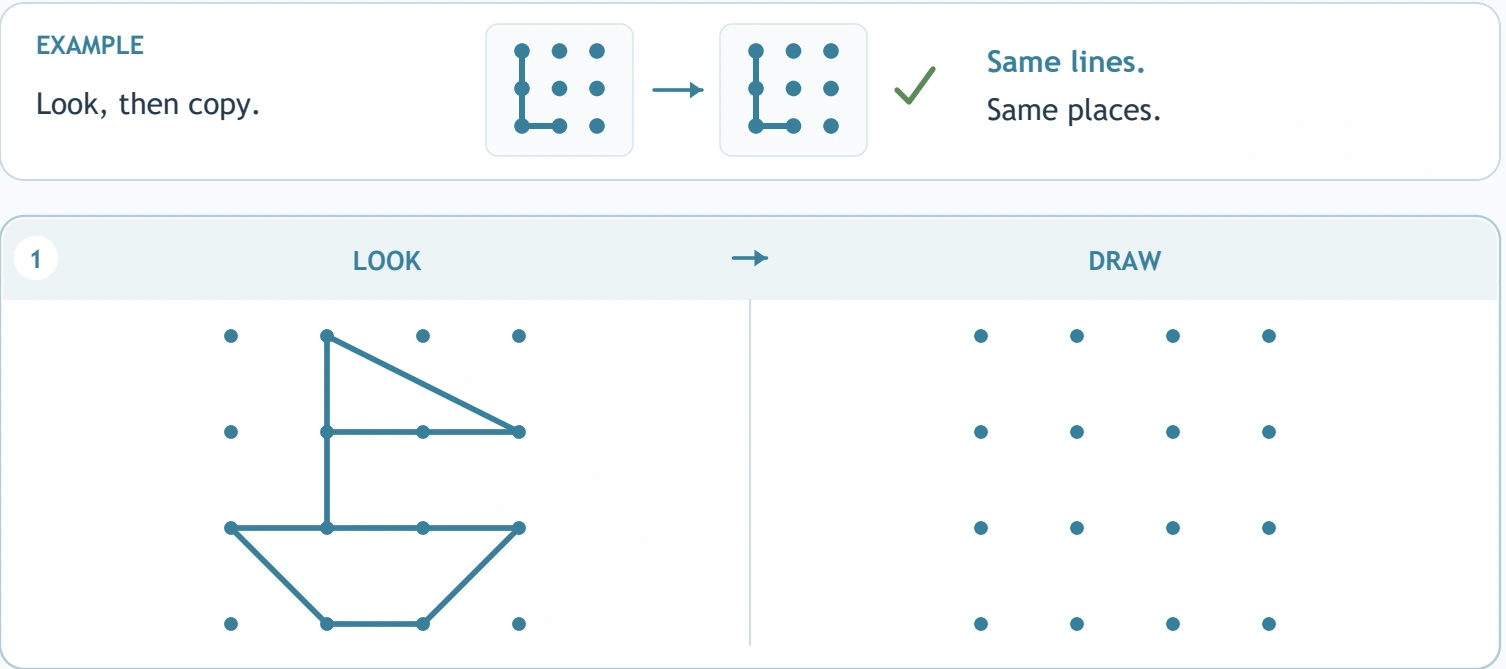
Sails lean in different directions across this small fleet. Sailboat Grid Sketches asks children to recreate three angular boat models on neighbouring sixteen-point fields, comparing the relationship between sail, mast and hull. The Sailboat Sketches source includes a right-facing sail, a left-facing arrangement and stacked rectangular sail details. A completed example introduces the copying method before the boat challenges begin. Choose the page for a learner who enjoys recognisable pictures and is ready to inspect their parts, rather than drawing a favourite boat from memory or adding an invented ocean scene.
Read the fleet before setting pencil to paper — Sailboat Grid Sketches
| Sailboat Grid Sketches pair | Visible Sailboat Sketches model | Model structure |
|---|---|---|
| 1 | Right-facing sail above a shallow hull | 16 anchors / 11 bold pieces in Sailboat Sketches |
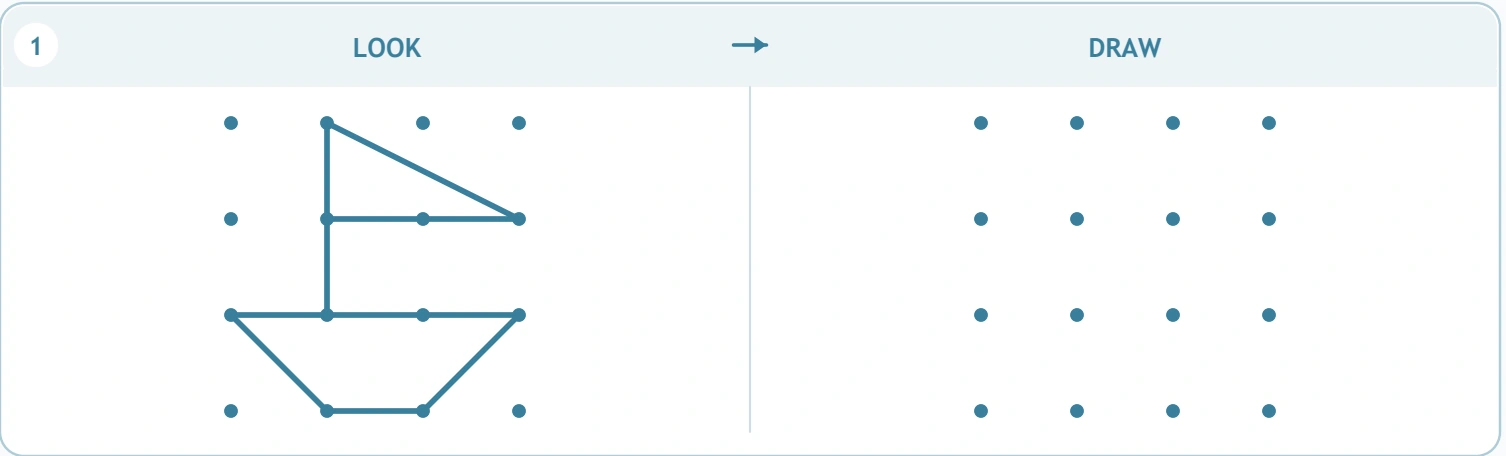
| 2 | Left-facing sail over an offset hull | 16 anchors / 12 bold pieces in Sailboat Sketches |
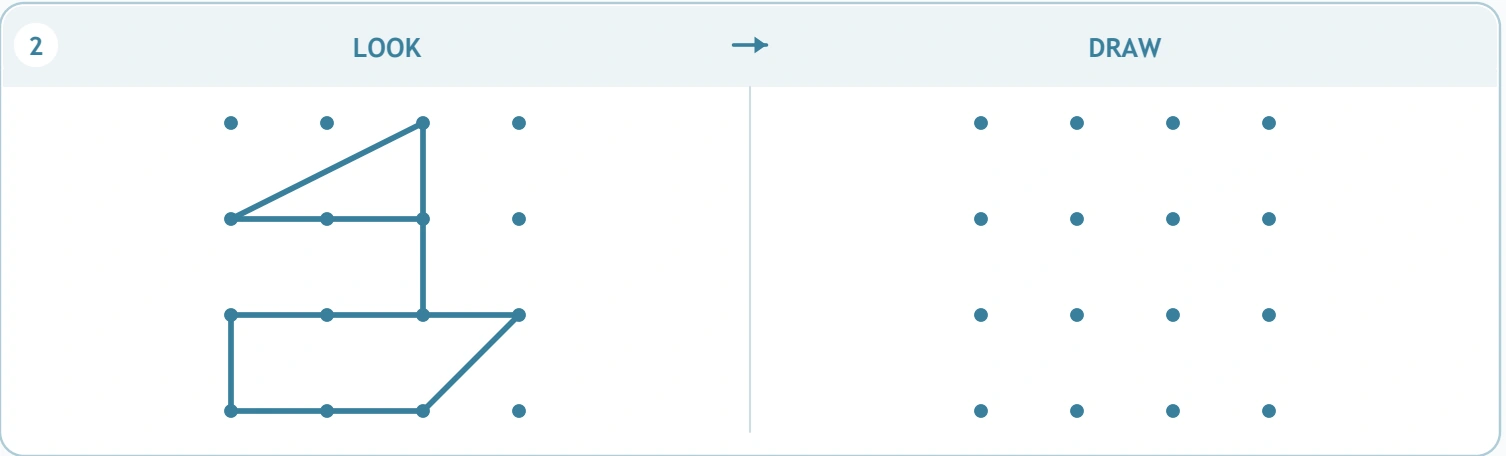
| 3 | Stacked rectangular sails above an angled hull | 16 anchors / 14 bold pieces in Sailboat Sketches |
Each Sailboat Grid Sketches answer area has sixteen markers. Bold segment counts describe the source construction, including aligned short pieces, not a compulsory drawing rhythm. Some boat parts can be grouped into one practical section; others are easier to inspect after lifting the pencil and returning to the reference.
A sail can change sides without moving the whole picture: Sailboat Grid Sketches
The first and second Sailboat Grid Sketches models make sail direction worth inspecting. Ask which side of the mast the main sail occupies in the chosen reference. Then compare its top and lower landing points with the corresponding positions in DRAW. The boat's name alone cannot answer those questions.
Preserve the sail's printed direction and the hull's offset. Flipping a familiar triangular sail may still look plausible as a boat while producing a different model. Keep LOOK visible and use a fingertip to check the selected side before drawing a long diagonal.
Vito's imagined harbour at home: Sailboat Grid Sketches
Picture Vito arranging toy boats beside a basin during supervised play. Later, an adult opens Sailboat Grid Sketches and asks which printed boat has a sail on the opposite side from the first. Vito points to the middle reference and builds its broad arrangement using strips on a dry table.
This home scenario is invented to illustrate a conversation, not offered as evidence of results. Vito can invent a harbour story freely, then copy one actual sail edge on paper. The story need not determine a direction of travel or add waves to the answer field; the reference still supplies the drawing information.
The hull deserves its own inspection: Sailboat Grid Sketches
It is easy to spend attention on the tall sail and overlook the lower shape. In Sailboat Grid Sketches, hulls differ in width, slope and their position relative to the mast. Point to one lower corner and compare how far it extends beyond the upright above it.
Copy a manageable hull portion, then return to the model before joining another edge. A child may start with the hull or the sail; the source sets no compulsory order. The important decision is where each part belongs, not whether the learner follows an adult's favourite sequence through the picture.
Six useful experiences from a compact boat plan: Sailboat Grid Sketches
- Left-right comparison. Sail placement makes a change of side visible within a recognisable subject.
- Part relationships. Mast, sail and hull must keep their positions relative to one another.
- Proportion checking. A broad hull and a narrow upper detail use different spans of the same point field.
- Directed pencil movement. Horizontal edges, uprights and slants invite changes of motion with deliberate endpoints.
- Looking back. A learner can consult the reference repeatedly instead of guessing the remainder from memory.
- Spatial explanation. Above, below, beside and farther out become useful words for describing a chosen part.
An adult can observe these experiences during Sailboat Grid Sketches without turning the activity into an ability test. A child may identify the correct sail side while needing a larger surface for a steady line. Respond to the positional understanding as well as the pencil result.
A classroom harbour-planning discussion: Sailboat Grid Sketches
For a possible classroom use, offer separate Sailboat Grid Sketches copies and invite learners to choose a boat detail to describe. One pupil may notice a left-facing sail, another an angled hull. The teacher can model locating the same two endpoints on a larger spare field.
In this imagined lesson, children work on one selected section while the reference remains available. Ask them to show which part they inspected before drawing. Avoid awarding success only for a full fleet: preserving one offset accurately may show more useful thinking than quickly finishing three boats with identical familiar sails.
Check the stacked details without simplifying them: Sailboat Grid Sketches
The last Sailboat Grid Sketches model contains stacked rectangular sail sections and an angled lower form. Children who expect every sail to be triangular may replace those details automatically. First identify the actual rectangular parts, then inspect where their horizontal edges stop relative to the mast.
This does not require an explanation of real boat engineering. The task is to compare the supplied picture. If a child asks why a sail looks unusual, welcome the observation and keep the drawing request specific: reproduce these visible connections. A separate original boat design can explore what they would change.
An invitation for children ready to compare picture parts: Sailboat Grid Sketches
Supported learners in approximately the four-to-seven age range may enjoy Sailboat Grid Sketches, including later preschool and early primary pupils. The sixteen-point field and several interacting parts can be demanding for beginners. Try locating a mast endpoint together before expecting a whole model copy.
If the anchors seem crowded, use wide strips to make a bigger sail-and-hull arrangement. Let the child point, describe or copy a short edge. Return to the printed page when that comparison feels comfortable. A learner's willingness to inspect another part is a better guide to session length than the amount of empty answer space.
Five harbour games that welcome larger movements: Sailboat Grid Sketches
Open a sail-direction sorting dock: Sailboat Grid Sketches
Make broad boat constructions with sails on different sides. Ask a child to sort them by a visible feature and explain the choice. Keep the models available to inspect. Relate one left-right difference to Sailboat Grid Sketches without requiring another small pencil task.
Build a hull for a given mast
Place an upright strip, then show a simple model with an offset hull. A partner adds matching lower pieces. Compare where the hull reaches beyond the upright. Reverse roles so the child can provide the plan as well as follow it.
Send a harbourmaster's message: Sailboat Grid Sketches
A toy harbourmaster describes a boat by two features, such as a left sail and a sloping hull. The child identifies the matching large model. The story gives descriptive language a purpose while staying separate from Sailboat Grid Sketches's printed copying instructions.
Curate unusual sails: Sailboat Grid Sketches
Use spare paper or sticks to invent rectangular, triangular and combined sail pictures. Discuss how the shapes differ. Value the invented fleet as creative work, then explain why an exact model copy preserves its own supplied sail arrangement.
Inspect one changed rigging detail: Sailboat Grid Sketches
An adult copies a large strip boat but moves a horizontal piece to another height. Invite the child to identify the change and suggest a correction. Keep the game collaborative; a mismatch is an invitation to compare, not evidence that someone has failed.
When the copied boat turns into a familiar symbol: Sailboat Grid Sketches
Common Sailboat Grid Sketches errors include flipping the sail, centring an offset hull, changing rectangular sections into triangles or adding decorative waves. Compare one distinctive part with LOOK and ask what information the printed model gives. That focused question offers a clearer repair clue than requesting an improved overall vessel.
A plausible sailing picture can still differ from the chosen reference. Offer another page for an invented vessel if the child wants creative freedom. Keep the copying request clear without discouraging the story. If erasing causes frustration, discuss one repair using movable pieces and leave the small panel for a later return.
End with a detail the learner can explain: Sailboat Grid Sketches
Boats can bring stories of journeys into Sailboat Grid Sketches, making a geometric task feel purposeful. Let the child select a sail corner or hull edge as the next small goal. Feedback like “That hull corner reaches beyond the upright” makes the observation concrete.
Offer brief revisits among construction, supervised water play and free art. Regular opportunities can involve one part rather than a full page. Keep the session comfortable enough that the learner can describe a discovery before stopping, instead of continuing until the familiar boat theme loses its appeal.
Download the boat plans in the appropriate edition: Sailboat Grid Sketches
The supplied Sailboat Sketches original is available as the free PDF. For the clean Sailboat Grid Sketches edition, use the premium download from an account with eligible membership that is currently active. That separate file has no website watermark, domain branding or promotional ads; the boat models, worksheet guidance and student fields are retained.
The collection card opens all thirty clean activity sheets in one PDF, priced independently at $3. Save the file your account is authorised to receive. Set US Letter paper in the print dialog, keeping scale at 100% or choosing Actual Size. Check the complete border and small mast anchors in preview before printing Sailboat Grid Sketches for use.
Continue comparing positions with related resources: Sailboat Grid Sketches
Compare Sailboat Grid Sketches with Path Copy Thinking. After Sailboat Sketches, try Drawing Size Choices. For Sailboat Sketches, consider Shape Border Journeys.
For activities beyond Sailboat Grid Sketches, adults can visit the PBS Parents Learn and Grow library or read NAEYC's family guidance on play. These are optional educational destinations, not collection attachments, and their inclusion makes no sponsorship or endorsement claim.
Popular Worksheets
Printable resources families and teachers are downloading now.
 Free
 Free
 Free
 Free