
free
Happy Shelf Groups: 4 Brilliant Sorting Decisions
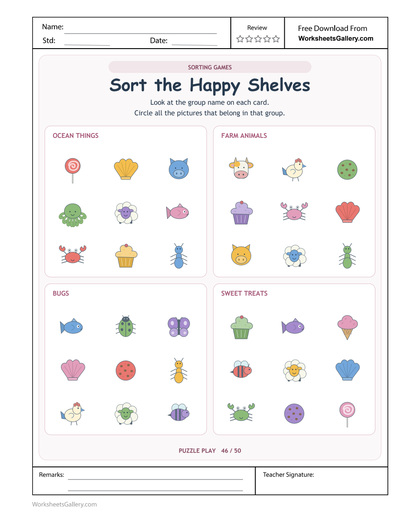
Apply a fresh group label to each card and leave unrelated pictures unmarked.
Apply a fresh group label to each card and leave unrelated pictures unmarked.
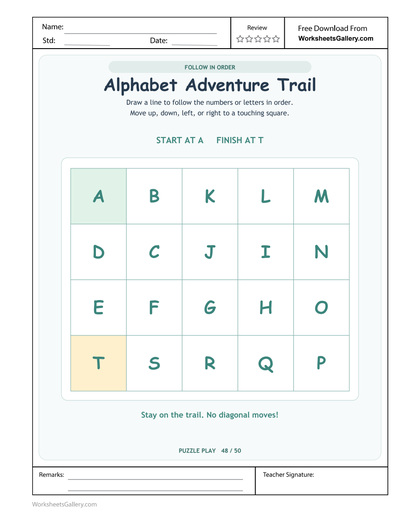
Carry alphabetical order through turns, moving only across a shared cell edge from A to T.
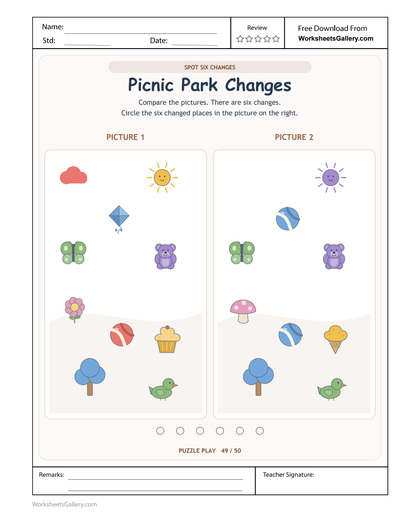
Compare corresponding locations and circle each changed area in the right-hand scene.
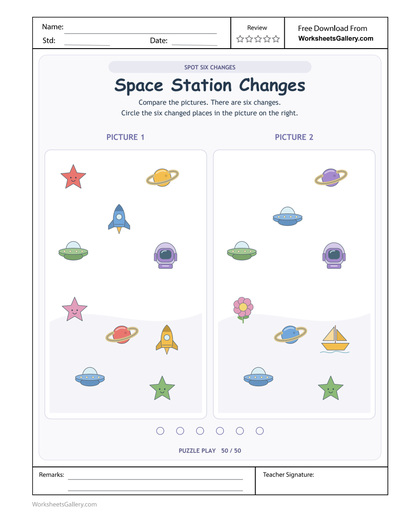
Separate a missing object from a replacement or colour change while checking the same scene region.
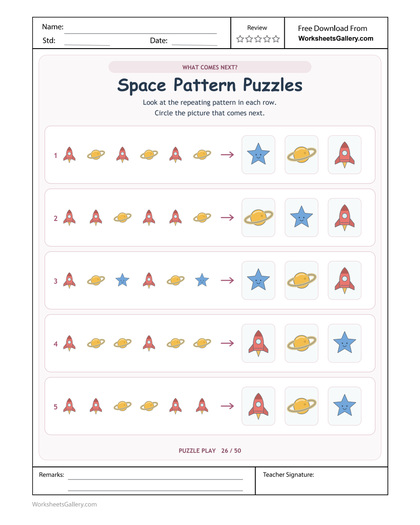
Find a complete repeating unit before choosing the next rocket, planet or star.
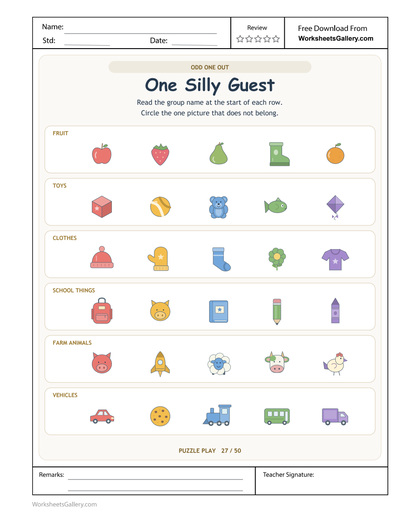
Use the printed category to identify one outsider, even when several pictures share a colour.
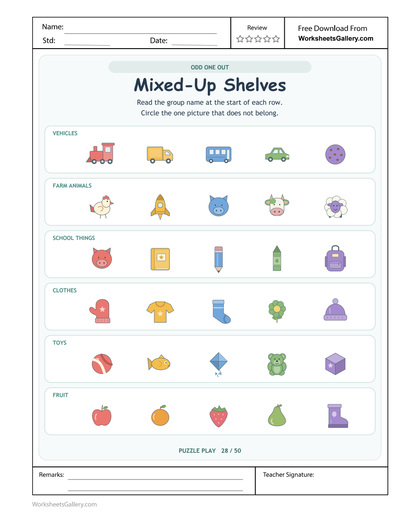
Read a new shelf label on every row instead of carrying the previous category forward.
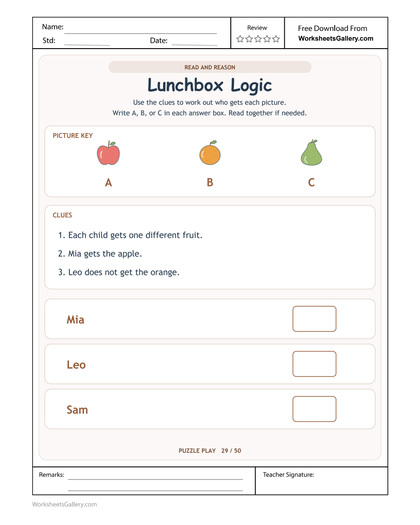
Combine a positive clue with a negative clue while keeping each fruit exclusive.
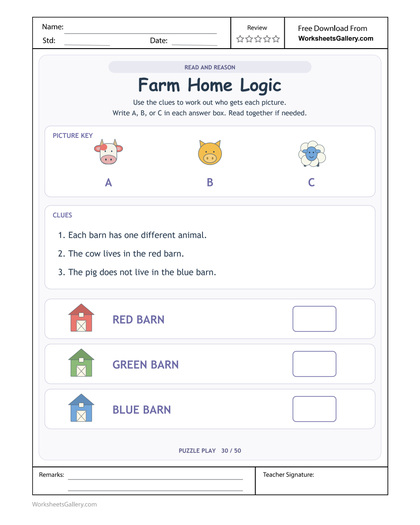
Use the fixed cow placement to narrow the pig clue before assigning the final animal.
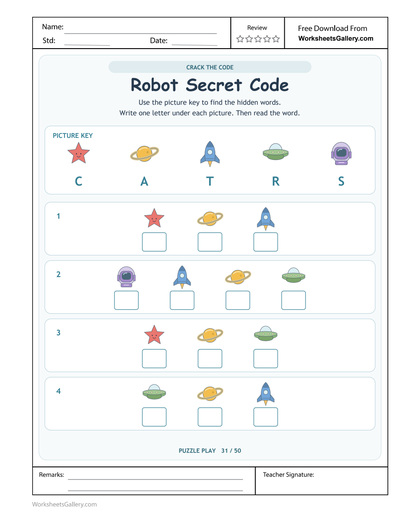
Translate each symbol through the supplied key; picture names do not provide the letters.
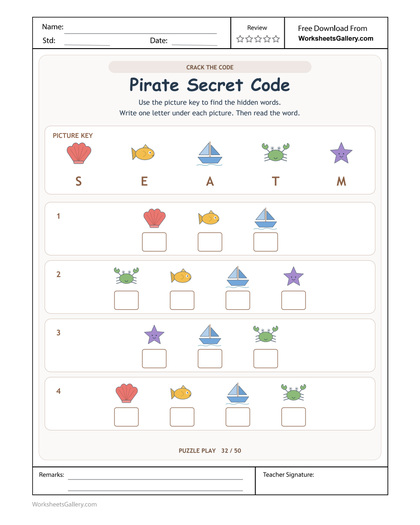
Keep one stable symbol-to-letter key while decoding sea-themed messages of different lengths.
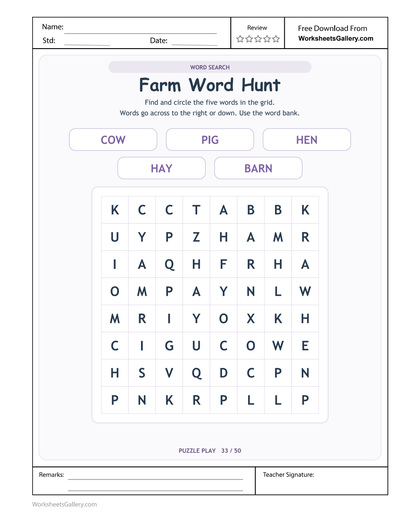
Track letters in a straight rightward or downward line and verify the whole bank word.
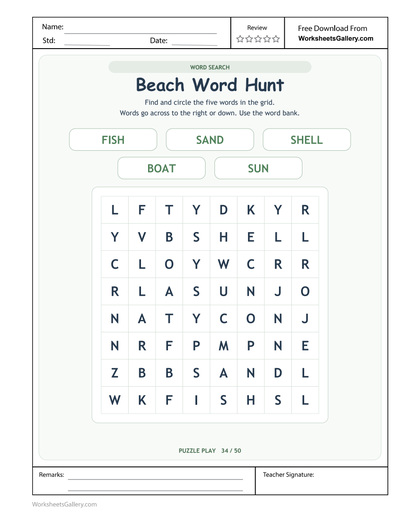
Check a promising first letter against every following letter before circling the full word.
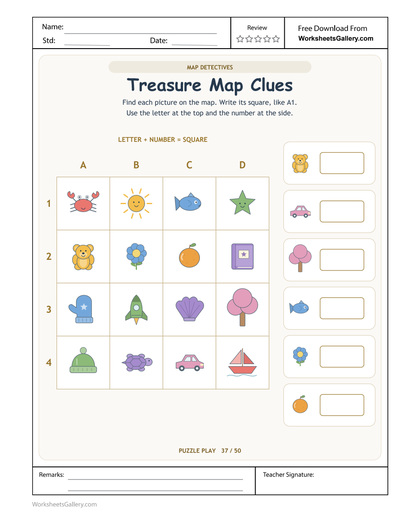
Combine a column letter with a row number to identify a square rather than a route.
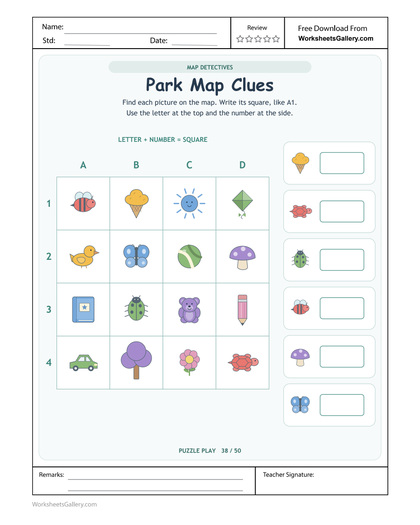
Find a pictured target first, then read both grid labels without swapping their order.
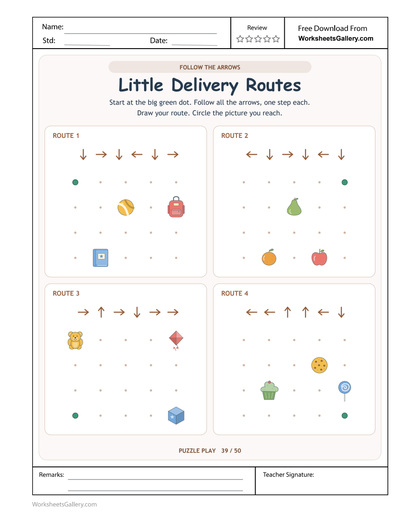
Execute every arrow once from the green starting dot; the destination is discovered at the end.
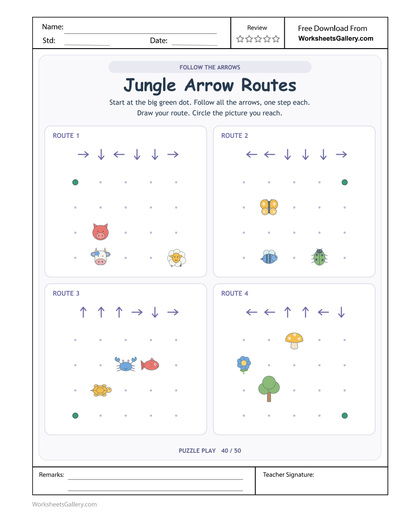
Mark the current dot while checking the next instruction so turns do not reset the route.
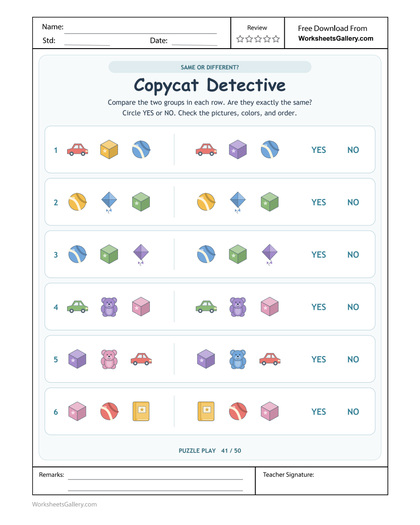
Compare identity, colour and position; a group with the same objects can still differ.
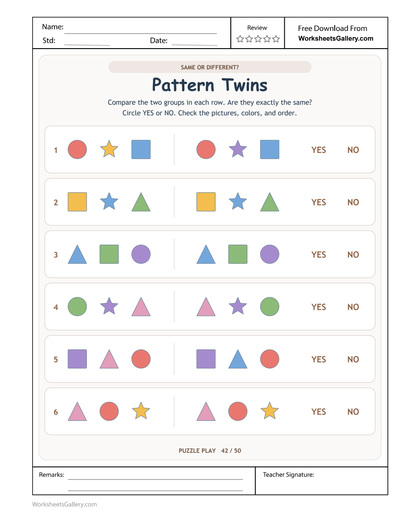
Check each position in a shape trio rather than treating a shared inventory as an exact match.
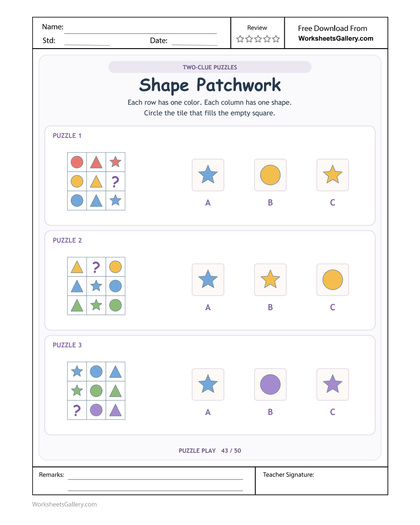
Intersect the row colour with the column shape to reject choices that satisfy only one clue.
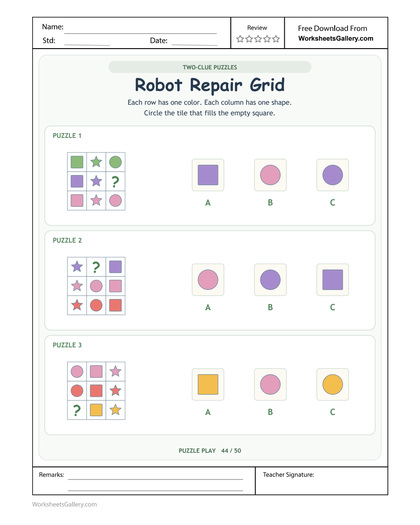
Treat colour and shape as independent constraints that meet at the empty grid position.
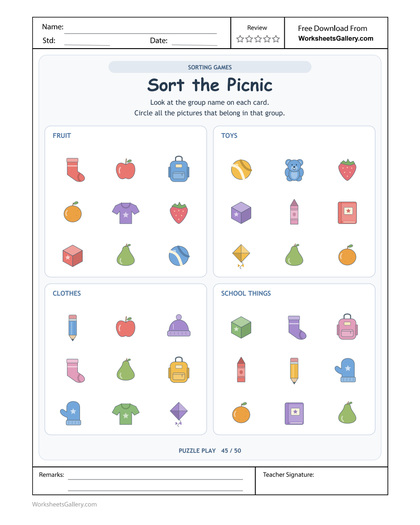
Test all nine pictures on each card; this task asks for every category member, not one answer.
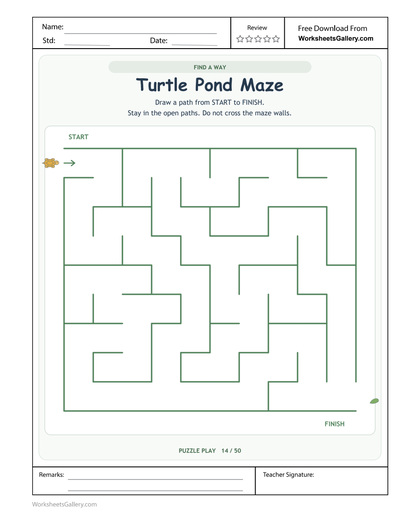
Turtle Pond Maze invites children to treat a blocked branch as useful information, returning to the last real choice without crossing a wall.
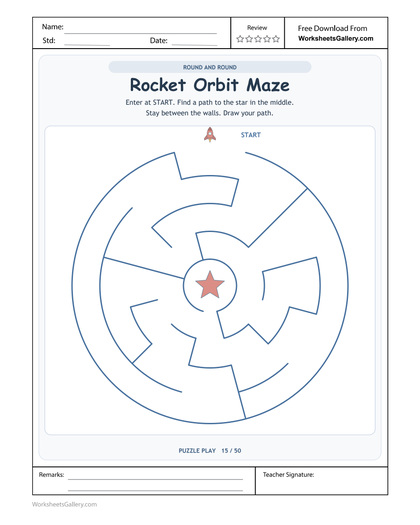
Rocket Circular Maze invites children to notice openings between curved walls and plan inward movement instead of following one ring forever.
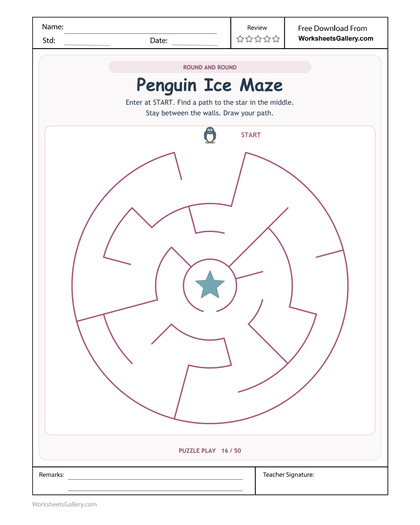
Penguin Round Maze invites children to keep track of which curved corridor you occupy, using the central star as a destination rather than a shortcut.
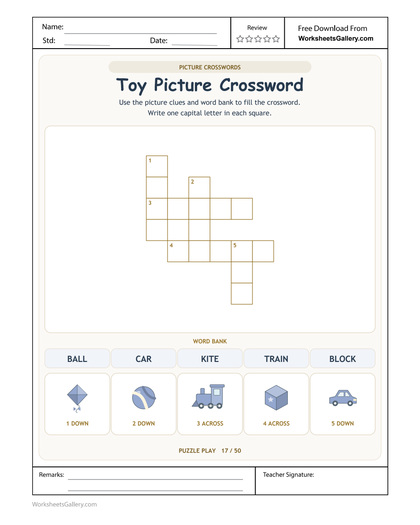
Toy Picture Crossword invites children to use clue direction and word length together before entering one capital per square.
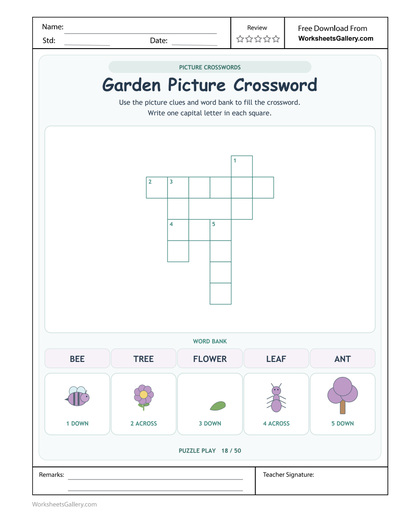
Garden Picture Crossword invites children to let a shared letter check two garden words, while keeping picture naming separate from spelling.
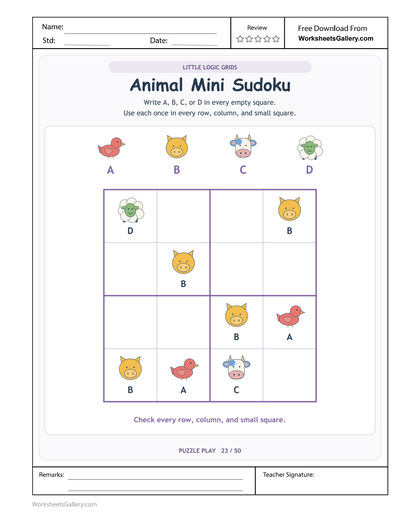
Animal Letter Sudoku invites children to name the missing code from a constrained row, then check its column and its two-by-two box.
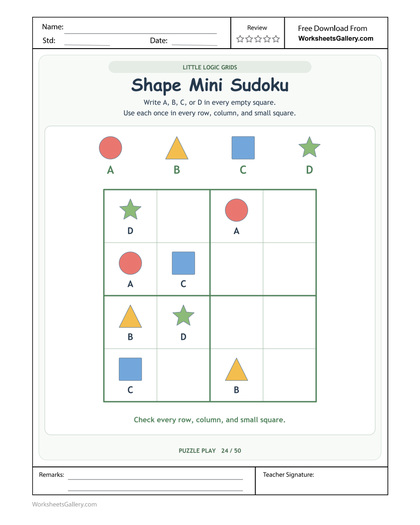
Shape Code Sudoku invites children to use a two-by-two box as the first filter and eliminate codes already present in the crossing row or column.
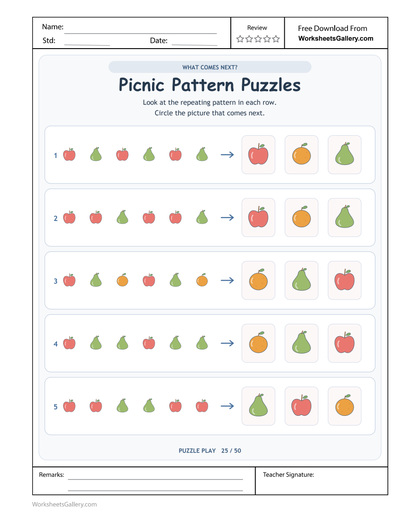
Picnic Fruit Patterns invites children to find the shortest repeating unit before predicting; the five rows use different structures.